.png)


.svg "DynaTechOps")
Key Takeaways
- SAP and Microsoft officially announced SAP Business Data Cloud Connect for Microsoft Fabric in November 2025, with general availability planned for Q3 2026.
- The new capability enables bi-directional, zero-copy data sharing between SAP Business Data Cloud and Microsoft Fabric.
- Organizations can work with SAP and non-SAP data across their analytics environment without relying on traditional data duplication for every use case.
- Azure's growing share of RISE with SAP deployments is another market signal of the closer alignment between the SAP and Microsoft cloud ecosystems.
- Business drivers such as integration delays, fragmented data tools, duplicate data, and rising maintenance costs are also influencing analytics decisions.
- This is an ongoing platform shift, not a settled debate over which analytics product is better. The SAP Analytics Cloud vs Power BI conversation is increasingly about how organizations want to build their broader data and AI strategy.
Introduction
In November 2025, SAP and Microsoft jointly announced SAP Business Data Cloud Connect for Microsoft Fabric, a new integration that connects SAP Business Data Cloud with Microsoft Fabric. General availability is planned for Q3 2026, making this a current development for organizations reviewing their SAP data and analytics strategies.
The integration allows bi-directional, zero-copy data sharing between SAP Business Data Cloud and Microsoft Fabric. SAP data products can be accessed via Microsoft's platform, including OneLake, without making duplicate data copies for each analytics workflow.
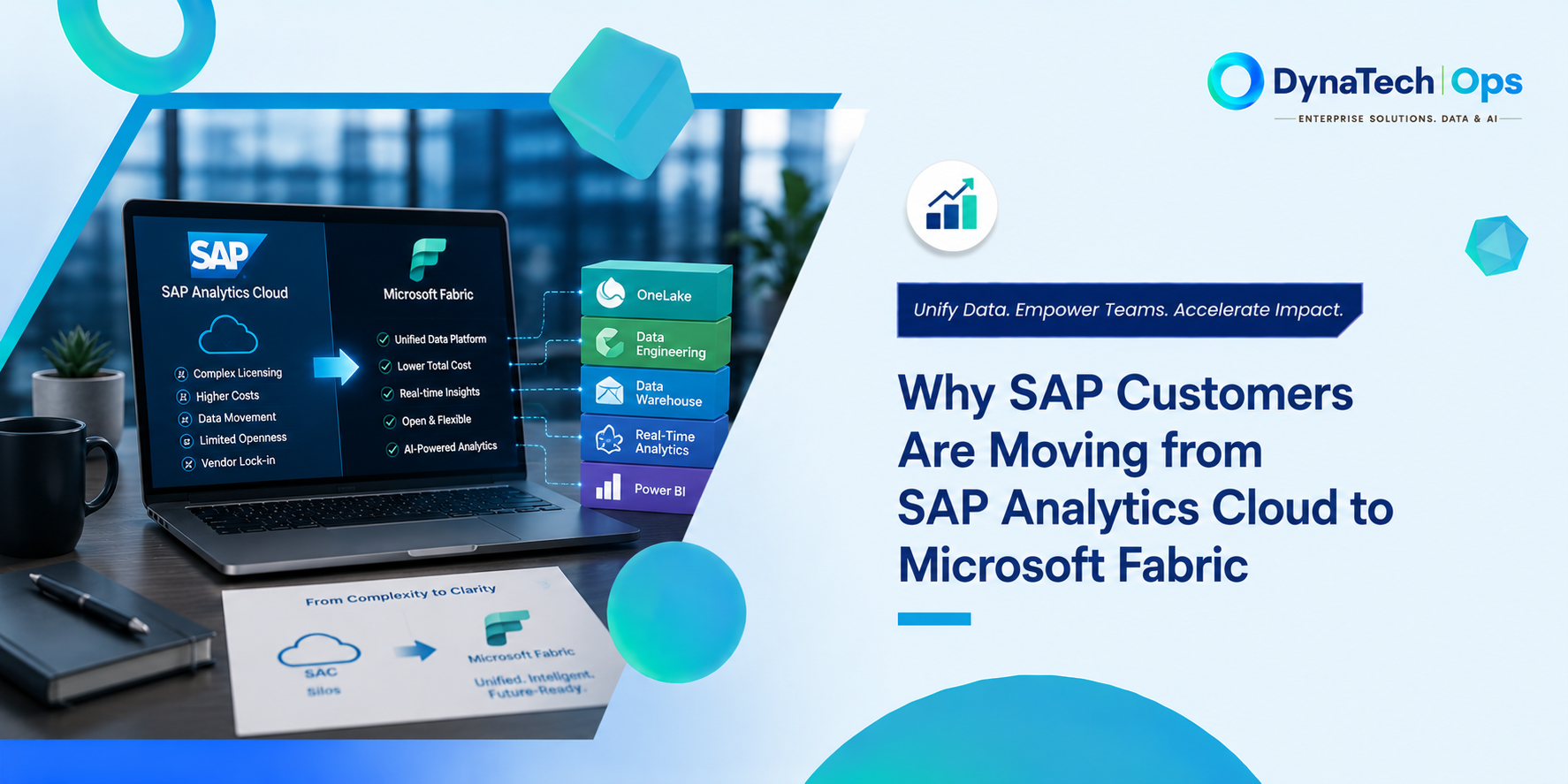
This announcement gives fresh context to the SAP Analytics Cloud vs Power BI discussion. The question is no longer only about which analytics platform offers better features. SAP customers also need to consider how their existing SAP data environment can work alongside Microsoft's broader ecosystem for analytics, data engineering, and AI.
The change doesn't mean the SAP Analytics Cloud will be replaced overnight. It offers another option for organizations using Microsoft or wanting to unify SAP and non-SAP data. With general availability in Q3 2026, this platform shift allows SAP customers to evaluate the option before major analytics architecture changes.
The Announcement Behind the Trend: SAP BDC Connect for Microsoft Fabric
The shift began on November 18, 2025, when SAP and Microsoft announced SAP Business Data Cloud Connect for Microsoft Fabric at Ignite. This enables bi-directional, zero-copy sharing between SAP Cloud and Microsoft Fabric, allowing access to SAP data for analytics and AI without traditional replication.
The SAP Business Data Cloud and Microsoft Fabric connection links SAP data with Microsoft's ecosystem. SAP data products integrate with OneLake, and shared data flows both ways, avoiding silos.
The announcement also points to practical use cases. Organizations can combine SAP and non-SAP data, use Power BI for advanced analytics and natural-language interactions, and build AI applications using capabilities such as Fabric data agents, Copilot Studio, and Microsoft AI Foundry.
This announcement is more than an integration update; it offers SAP customers a new perspective on analytics architecture. Companies invested in Microsoft tech can now access SAP data within a broader Fabric environment without creating multiple copies.
SAP leadership has also framed the announcement around this broader data and AI strategy. Irfan Khan, President and Chief Product Officer for SAP Data and Analytics, said:
“With SAP Business Data Cloud and Microsoft Fabric, we're delivering a trusted foundation for analytics and AI, and helping our customers move faster, make smarter decisions, and turn insight into real business outcomes.”
Timing is also important. SAP states that SAP BDC Connect for Microsoft Fabric is planned to be generally available in Q3 2026. This SAP BDC connect fabric GA date means the market is still in an active transition rather than looking back at a completed platform change.
For SAP customers, the discussion shifts from which analytics platform is better to how SAP data fits into a broader data, analytics, and AI environment, making the SAP Analytics Cloud vs Power BI debate more relevant.
What Zero-Copy Data Sharing Actually Changes
Zero-copy data sharing means organizations can make data available across platforms without creating another physical copy for every analytics or AI workload. The planned SAP Business Data Cloud and Microsoft Fabric integration support bi-directional, zero-copy sharing between the two environments.
Traditionally, importing SAP data into another analytics platform involves extracting, transforming, and storing a second copy that needs regular updates. If the pipeline delays or fails, the analytics may have outdated SAP data.
Zero-copy sharing changes this approach. Instead of repeatedly copying and synchronizing data between SAP and Microsoft environments, the platforms can share access to the same underlying data without creating unnecessary duplicate copies.
What Changes for Organizations?
This can help organizations:
- Reduce unnecessary data duplication and storage.
- Lower the operational effort needed to maintain data pipelines.
- Reduce the risk of outdated or conflicting data copies.
- Bring SAP and non-SAP data together more efficiently for analytics and AI.
- Give teams faster access to SAP data through Microsoft Fabric capabilities.
The key point is that zero-copy is more than a faster data transfer method. It represents a change in data architecture, reducing the need to move and maintain the same information across multiple environments.
However, it does not eliminate the need for data governance, security, access controls, and clear data ownership, which are essential to keep shared data trusted and well-managed.
The Real Business Drivers Behind the Shift
The move to Microsoft Fabric is driven by factors beyond product features. For many SAP customers, the main concern is the cost and complexity of transferring data between business systems and analytics platforms.
Batch Processing Can Slow Decisions
Traditional SAP integration approaches often rely on scheduled data extraction and batch processing. This can delay the gap between when business activity happens and when updated data becomes available for analysis.
For organizations that need faster reporting or near-real-time business insights, these delays can make it harder to respond quickly to changes in sales, supply chains, finance, or operations.
Too Many Tools Create More Maintenance
SAP data environments can involve multiple connectors, pipelines, integration tools, and storage layers. As these components grow, the effort required to monitor and maintain them increases.
A more connected SAP and Microsoft data environment can help reduce some of this complexity by limiting unnecessary data movement and duplicate pipelines.
Parallel Infrastructure Adds Cost
Maintaining separate infrastructure for data extraction, storage, transformation, and analytics can increase both technology and support costs. Organizations may also need to manage multiple licenses, integration processes, and specialist skills.
Reducing unnecessary duplication can therefore become a business decision, not just a technical one.
What Does Research Say?
Evidence also suggests that ecosystem alignment can affect how quickly organizations realize value. Analytics Creator, citing a 2025 BARC survey, reports that organizations aligned with the Microsoft ecosystem achieved value realization 25% faster.
This is third-party research finding, rather than a performance claim made directly by SAP or Microsoft. That distinction matters when evaluating the broader shift.
These factors explain why discussions shift from SAP Analytics Cloud vs Power BI to reducing complexity, controlling costs, and supporting faster analytics and AI adoption.
The Market Signal: Azure's Growing Share of SAP Deployments
The shift toward Microsoft Fabric is also happening alongside a broader change in where SAP workloads are deployed. The Azure rise with SAP market share is an important market signal in this shift. According to SAVIC Technologies' reporting from SAP Sapphire 2026, Microsoft Azure accounted for more than 60% of new RISE with SAP deployments in the first half of 2026.
This market signal shows many organizations using RISE with SAP are already building their SAP cloud environments on Azure, strengthening connections between SAP data and Microsoft's ecosystem.
The timing is particularly relevant because SAP and Microsoft announced SAP Business Data Cloud Connect for Microsoft Fabric in late 2025. With the planned integration, organizations using SAP in an Azure-based environment can increasingly look at SAP data, Microsoft Fabric, Power BI, and AI capabilities as part of a connected data strategy.
This doesn't mean all SAP customers should switch to Fabric or Azure. However, as most new RISE with SAP deployments is on Azure, closer SAP-Fabric integration is a logical next step, not just market speculation.
For organizations evaluating the SAP Analytics Cloud vs Power BI question, this broader ecosystem alignment matters. The Azure rise with SAP market share also shows why Microsoft's wider cloud ecosystem is becoming increasingly relevant to SAP customers.
The decision is increasingly influenced not only by analytics features, but also by where SAP workloads run, which cloud platforms the business already uses, and how easily SAP and non-SAP data can work together.
What This Means If You're Currently on SAP Analytics Cloud
If your organization already uses SAP Analytics Cloud, you don't need to replace it immediately. SAC remains relevant for SAP-native planning and financial workflows, including write-back capabilities with S/4HANA.
The bigger change is that the gap between SAP Analytics Cloud vs Power BI is becoming less rigid. SAP Business Data Cloud Connect for Microsoft Fabric creates a path for SAP data to work more closely with Microsoft's analytics and AI ecosystem.
What Should SAP Customers Consider?
Instead of planning an immediate migration, organizations should assess:
- Existing SAC investments: Review current planning and reporting workflows before making changes.
- Microsoft ecosystem: Consider existing use of Azure, Power BI, and Fabric.
- Data architecture: Identify how much data is copied and moved between platforms today.
- Future needs: Assess upcoming analytics and AI requirements.
- Integration costs: Review the effort required to maintain existing pipelines and connectors.
The opportunity is to stop thinking about one platform exclusively. An organization can continue using SAC for SAP-centric planning while exploring Fabric and Power BI for broader SAP and non-SAP analytics.
A Realistic Timeline for This Shift
This shift is still developing. The key milestones show why organizations should view it as an ongoing change rather than an immediate move away from SAP Analytics Cloud.
| When | What Happens |
|---|---|
| November 2025 | SAP and Microsoft jointly announce SAP Business Data Cloud Connect for Microsoft Fabric. |
| H1 2026 | Azure accounts for over 60% of new RISE with SAP deployments, according to SAVIC Technologies' reporting from SAP Sapphire 2026. |
| Q3 2026 | SAP BDC Connect for Microsoft Fabric is planned to reach general availability. |
These milestones show a clear progression: SAP announced the Microsoft integration in late 2025, Azure's position in new RISE with SAP deployments provided a current market signal in H1 2026, and the planned SAP BDC Connect Fabric GA date is Q3 2026.
SAP customers should evaluate current analytics investments and plan for a connected SAP and Microsoft data environment, rather than rushing into platform replacement.
Frequently Asked Questions
1. What is SAP Business Data Cloud Connect for Microsoft Fabric?
SAP Business Data Cloud Connect for Microsoft Fabric is a planned integration that enables bi-directional, zero-copy data sharing between SAP Business Data Cloud and Microsoft Fabric.
2. Does moving toward Microsoft Fabric mean giving up SAP Analytics Cloud?
No. SAP is not abandoning SAP Analytics Cloud. Organizations can continue using SAC for SAP-focused planning and analytics while using Fabric and Power BI for broader data and analytics needs.
3. What is the SAP BDC connect fabric GA date?
Q3 2026. SAP and Microsoft announced the integration in November 2025, with general availability planned for Q3 2026.
4. Why is Azure's share of new RISE with SAP deployments significant?
The Azure rise with SAP market share is significant because Azure accounted for over 60% of new RISE with SAP deployments in H1 2026, according to SAVIC Technologies. This indicates strong SAP-Microsoft cloud alignment and supports the growing relevance of Fabric for SAP customers.
Related Terms
- SAP + Microsoft Fabric & Power BI: The Complete BI Guide
- SAP Data, Analytics & AI Services
- Microsoft Fabric for SAP
Understand What This Shift Means
Want to know how SAP BDC Connect for Microsoft Fabric could affect your SAP environment? Talk to DynaTechOps to explore your options.